
FURNITURE + ACCESSORIES
MAINTENANCE

Aluminum (without cushions)
Aluminum furniture can be maintained by wiping the frame with a damp cloth; during winter or prolonged bad weather, it is best stored indoors or protected with covers to ensure long-lasting use.
Aluminum (with cushions)
Aluminum furniture can be maintained by wiping the frame with a damp cloth; cushions should be brought indoors during winter or prolonged bad weather and can be surface-cleaned with a damp cloth or, if removable, machine-washed at 30°C.


Synthetic Wicker (with cushions)
To maintain synthetic wicker furniture, wipe the surfaces with a damp cloth and bring cushions indoors during winter or extended bad weather; cushions can be surface-cleaned with a damp cloth or, if removable, machine-washed at 30°C to keep them fresh.
Natural Rattan (without cushions)
To maintain natural rattan furniture, place it in indoor or covered areas away from direct sunlight and moisture, and clean with a soft damp cloth. Natural variations in tone and texture are part of the character of rattan and may develop over time.


Natural Rattan (with cushions)
To maintain natural rattan furniture, keep it in indoor or covered areas away from direct sunlight and moisture, and clean with a soft damp cloth; cushions should be brought indoors during winter or rain, and can be surface-cleaned with a damp cloth or, if removable, machinewashed at 30°C.
Teak (without cushions)
Teak furniture can be cleaned with mild teak soap or lightly sanded to remove stains; if left outdoors in winter, it will develop a natural silvery-grey patina, though products are available to restore its original color. To maintain its original look, bring it indoors or use protective covers during the winter months.


Teak (with cushions)
Teak furniture can be cleaned with mild teak soap or lightly sanded to remove stains; if left outdoors in winter, it will develop a natural silvery-grey patina, though products are available to restore its original color. To maintain its original look, bring it indoors or use protective covers during the winter months.
Teak Base with Wicker Weaving
(with cushions)
Teak furniture can be cleaned with mild teak soap or lightly sanded to remove stains; if left outdoors in winter, it will develop a natural silvery-grey patina, though products are available to restore its original color. To maintain its original look, bring it Indoors or use protective covers during the winter months.

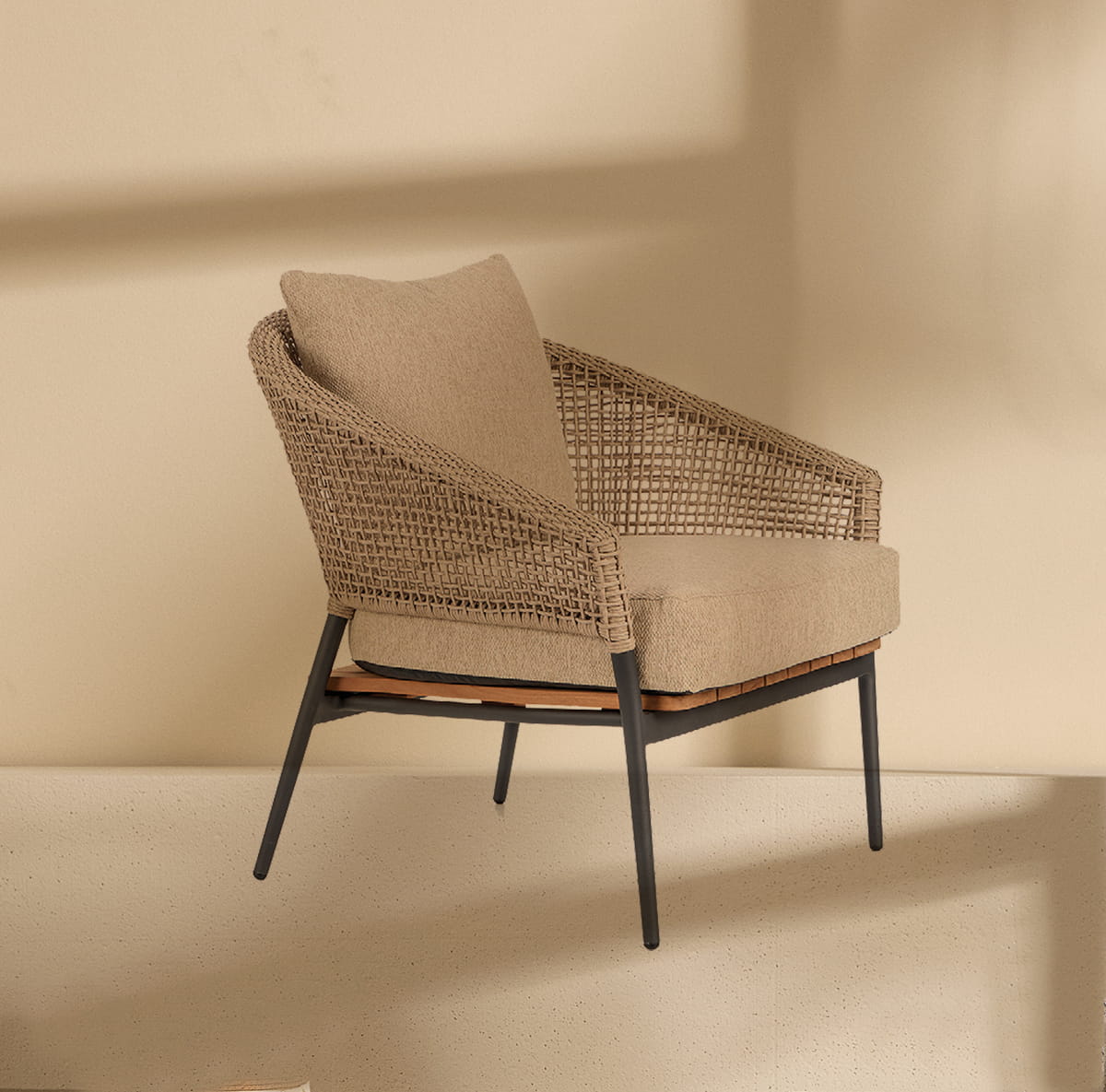
Aluminum Frame with Wicker or
Textilene Weaving (with cushions)
Aluminum frame furniture with wicker or textilene weaving can be maintained by wiping the frame and weaving with a soft damp cloth; avoid abrasive cleaners that may damage the surface. Cushions should be brought indoors during winter or prolonged rain and can be surfacecleaned with a damp cloth or, if removable, machine-washed at 30°C. When not in use for long periods, it is best to cover or store the furniture to ensure long-lasting use.
Concrete (without cushions)
Concrete furniture should be cleaned with a soft damp cloth and mild soap; avoid abrasive cleaners that can damage the surface. To protect against stains and moisture, reseal the surface every 1–2 years with a suitable concrete sealer. If left outdoors in winter, protect with covers or bring indoors to prevent racking
from frost. Over time, natural variations in color may appear, which are part of the material’s character.


Stoneware Pots & Vases
Stoneware pots and vases should be cleaned with a soft brush or damp cloth to remove dust and dirt; avoid harsh cleaners that may damage the finish. They are frost-proof and suitable for year-round outdoor use. Natural variations in color and finish are intentional and form part of their unique character.
Natural Material Baskets & Accessories
Baskets and accessories made from natural materials such as rattan, bamboo, or jute should be kept in indoor or covered areas, away from direct sunlight and moisture. Clean with a soft dry or slightly damp cloth, and avoid soaking or using harsh cleaners, as this may damage the fibers. Natural variations in color
and texture are part of their authentic character and may develop over time with use.
